



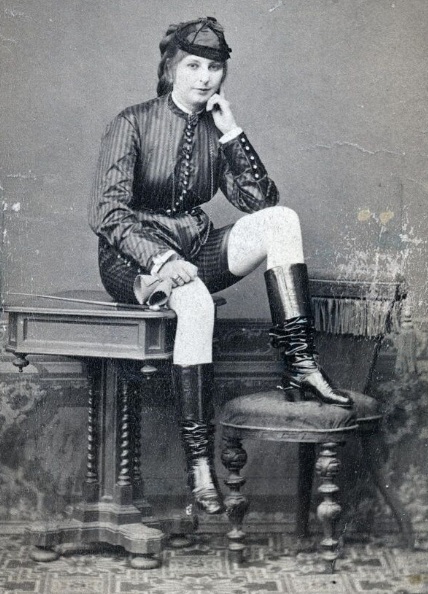
Above: Emilie Turaczek, AKA Fiakermilli (detail). Source: Osterreichische Nationalbibliothek (Austrian National Library)
1. Josef Bratfisch (continued)
Wiener Fiakerlied became part of Josef's repertoire and his interpretation of the song added to his popularity, notably at the annual Fiakerbal held every February on Ash Wednesday (Kornberger).
Viennese cab drivers, like their counterparts in London and elsewhere, often had picturesque nicknames. These became stage names which added to the mystique of fiakersanger performances. Josef, who was a bit plump, acquired the nickname "Nockerl" or "Dumpling."
Gustav Pick's success inspired rival composers who began churning out fiakerlieder of their own. As well, the popularity of singing cab drivers spawned a host of imitators.
One of these was an attractive woman named Emilie Turaczek who was known to her public as Fiakermilli. She created a sensation by appearing on stage in tight-fitting shorts and boots, a costume so daring that she had to get special permission from the police to wear it.
In addition to his stage appearances Josef also organized musical performance events known as Fiaker soirees. One of these in 1882 featured the Schrammel Quartet and probably began Josef's association with them.
The Schrammel Quartet was popularly known as the Schrammels and was composed of the two Schrammel brothers, Johann and Josef, plus Anton Strohmayer and Georg Danzer.
The Schrammels were superstars of the Vienna nightclub scene. When they played for dinner theatre audiences in Vienna's biggest restaurants, they drew such huge crowds that as many as 300 cabs waited outside.