




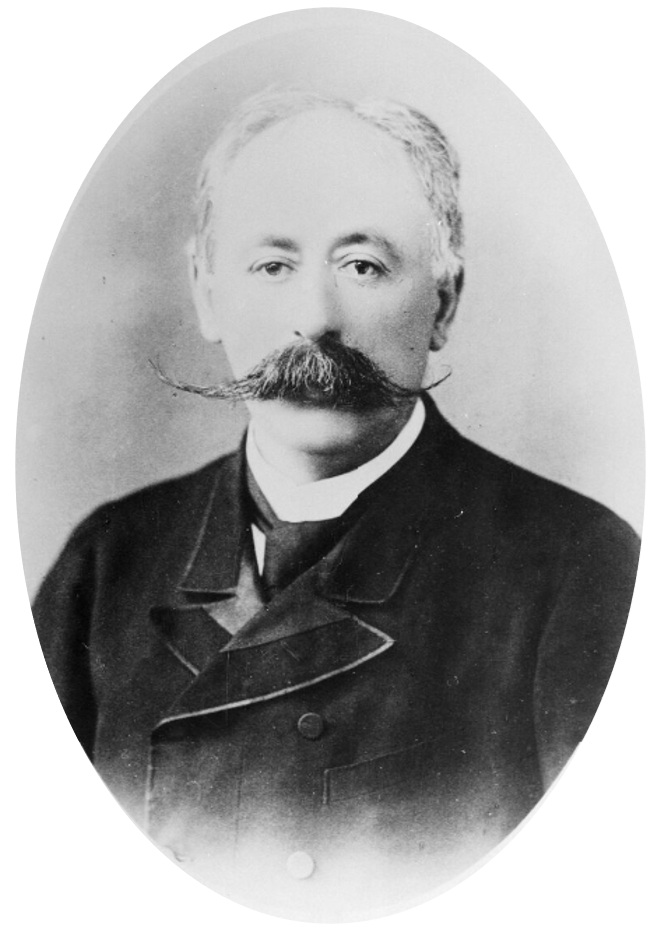
Above: Baron Moritz von Hirsch (1831-1896), also known as Maurice de Hirsch, banker, philanthorpist and close friend of Rudolf.
Source: Osterreichische Nationalbibliothek (Austrian National Library)
13. The Last Night (continued)
Before leaving for Mayerling Rudolph left four letters in his writing desk at the Hofburg with instructions that they be delivered to the addressees. One letter was to his sister Valerie, the second to Crown Princess Stephanie, the third to his friend and banker Baron Moritz von Hirsch and the fourth ("overbrimming with love" according to Count Hoyos) to Mizzi Caspar. Stephanie published her own letter in her memoirs. It began: Dear Stephanie, You are rid of my presence and plague; be happy in your own way." (Judtmann 146).
The other letters were not made public except for isolated quotations published by people who claimed to have seen them.
The only letter that Rudolf wrote at Mayerling was to his mother, Empress Elisabeth. It was destroyed on Elisabeth's instructions after her death but purportedly contained the phrase "I have no right to go on living; I have killed!" (Judtmann 150).
Rudolf also requested that "All letters from Countess Marie Larisch-Wallersee and the little Vetsera [i.e., Mary] to me are to be destroyed at once." Rudolf had evidently not destroyed the Countess's letters, perhaps to maintain his hold over her if she became uncooperative.
Rudolf also instructed that "Any money that is found, please hand it all over to Mitzi Caspar. My valet Loschek knows her precise address" (Judtmann 143). At first blush it looks like Rudolf was kissing Mizzi off with some spare change, but in fact the loose cash found at Mayerling and the Hofburg totaled 30,000 florins.
Rudolf's letter to Baron Moritz von Hirsch has not survived, but it was known that Rudolf borrowed money from Hirsch to the amount of 150,000 florins. This was quietly repaid to Hirsch by the Court Privy Purse.
According to conflicting testimony from different people, Rudolf used the loan either to meet the Countess's requests for money or else to provide for Mizzi Caspar after his death. In either case borrowing from Hirsch allowed Rudolf to conceal the purpose of the expenditure from the Hofburg finance department and particularly from Franz Josef.