




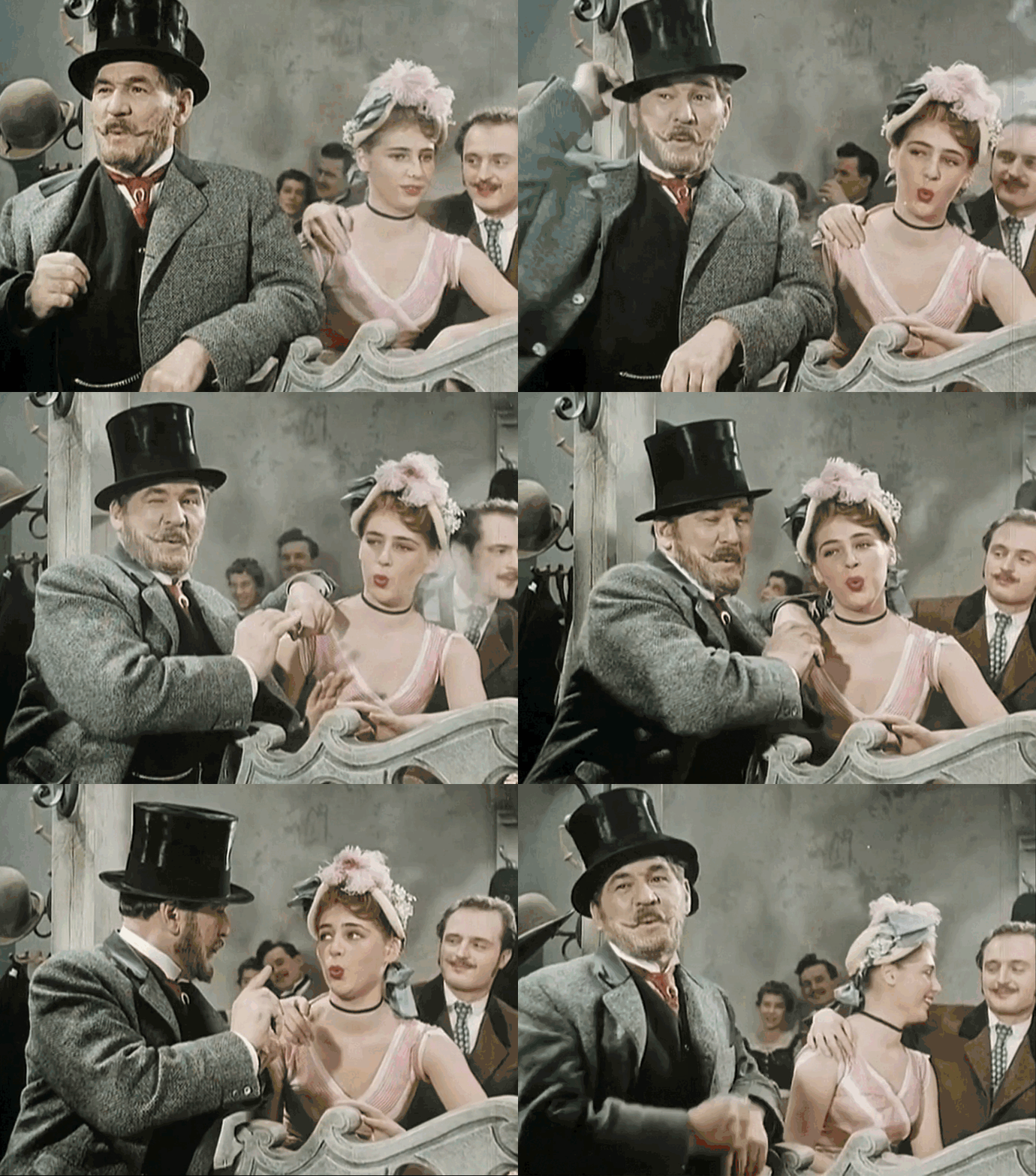
Above: Attila Horbiger (1896-1987) as Bratfisch in the 1956 film Kronprinz Rudolfs letzte Liebe (Crown Prince Rudolf's Last Love). A young woman joins him to whistle the movie's theme song in a duet.
Source: Kronprinz Rudolfs letzte Liebe - Spielfilm - Rudolf Prack ... via YouTube.
21. Aftermath: Josef (continued)
Again, Austrian Member of Parliament Leopold Kunschak, who in an earlier life was an apprentice saddler and did cab repairs for Josef, declared in his memoirs that the emperor "made generous provision for his further livelihood by letting him buy a house in the seventeenth district, in Lacknergasse, and made available to him both carriages and horses from Imperial stock to enable him to run his own cab business" (Judtmann 35).
Probate records show that Josef was solvent at his death in December, 1892, but they reveal no evidence of imperial largesse: "his assets, including the house, amounted to 14,214 florins, while his liabilities amounted to 8,827 florins, including two mortgages on his house totalling about 6,200 florins... all of which tends to show that he was not doing all that well financially" (Judtmann 35). Josef bought the house at Lacknergasse 8 in March, 1889, for 8,761 florins and 74 krons, paid in cash (Hummelberger 288).
These amounts certainly seem modest when compared to the 30,000 florins in loose cash that was passed on to Mizzi Caspar after Rudolph's death, or the 60,000 florins she paid for her own house; or the 25,000 florins the Countess received from Rudolph to finance her stay in Vienna, or even the 10,000 florins she asked of Rudolph for a single trip to Nice.
Josef's assets were small enough that Johanna Bratfisch felt compelled to sell off his "museum" of curiosa and artworks. In January, 1894 these items, along with items from the estate of Johann (*) Schrammel, who died in June 1893, were sold at auction (Hummelberger 288). Like Josef, the two Schrammel brothers are buried in Hernals Cemetery.
On the other hand Josef evidently did start his own cab business with additional cabs and drivers. At his death Johanna took over the business, first as a sole proprietor and later in partnership with her son Josef Linka. By the time she died in 1916 the fleet of horse cabs had been replaced by automobiles. (Reichpost)
(*) Walter Hummelberger says it was Josef Schrammel's estate, but Josef Schrammel did not die until November, 1895.